The Lyin’, the Which? and the Word-robe

Glasses and penThe Lyin’ – can otherwise be known as denial, delusion, or any one of several other descriptions. It’s how we deceive ourselves about any aspect of our prospective book.
I love that idea for a cover, we the author might think. Remember, unless we’re honest and open to outside influence and the opinion of those with more experience, a badly designed, or even inappropriate cover is a death-sentence for a book.

Until last year I was one of the worst offenders in this category, because I’m an artist, so who’s going to know better than me? Let’s see … oh yes, a book cover designer. I paid for three of my covers to be designed professionally and my books captured more interest – and damn me if they didn’t start selling more.

We can do the same with the writing. As the author who produced the wonderful story, we can truly appreciate how good it is – can’t we? We let relatives or friends read it and they suggest publishing, because they are so amazed at our talent … yeah, whatever.

DO NOT listen to friends or relatives; unless they are qualified to give an objective opinion.

That is an area where I’m pretty well protected. My wife and son don’t read fiction, and since leaving my military career in 1992 I’ve never had an acquaintance I would promote to the title of ‘friend’. The closest folk to me are those I’ve met on sites and blogs. I will give special mention here to Paul Ruddock, because we’ve actually met, and he really is a nice guy. We met at the Self-Publishing Conference earlier this year – an eye-opener.

The Which? – refers to how we can learn about the craft of presentation? Read, read, and then read some more. When you’ve finished … well read more. Don’t depend solely on one writer and one genre, but do consider reading authors who are already established. For example: Wilbur Smith, Tom Clancy, Stephen King, Sue Moorcroft or any other author who is already a name and publishes in the conventional (paperback/top publishing house) system.

I would suggest that if you are a fellow Indie author it is a good idea to read those established authors in eBook format. Why? Quite simply because it lets you see what the book layout should look like and how paragraphs are dealt with. You’ll see for example that dialogue has a certain discipline. Dialogue is indented, just like fresh paragraphs are indented.

What else is there? Oh yes! Punctuation. You are not going to see more than one exclamation mark!!! You are not going to see an ellipsis of more than three full stops … or are you ….. “When do you use double quotes?” and ‘Why would you change to single quotes?’

The Word-robe – ah yes, and to make it easy straight away, I’ll rename it. For the sake of argument let’s call it a … Dictionary and Thesaurus. We must all learn to expand our vocabulary so that we don’t depend on the same word being used continually in a book, if there are alternatives.

Let’s look at moving from point A to point B:
He walked, jogged, ran, sprinted, hurled, fell, staggered, strolled, minced, and with a few drinks your character will probably invent some others for you.

Remember, don’t use a big word or obscure word when a straightforward, smaller word will work just as well.

I’d like to suggest checking out ‘Resources for Writers’ on my main menu. A decent, simple-to-follow book on punctuation and grammar is an investment. If I had to suggest three books to have close at hand they would be:
Any good, standard-sized Dictionary and Thesaurus
On Writing by Stephen King
The Writer’s abc Checklist by Lorraine Moore & Maureen Vincent-Northam

I do realise that I might sometimes come across as being hard-nosed in my opinions, but it’s hard to inject humour and be taken seriously when writing about something you care about.
Please keep in mind that your name, brand, credibility as a writer and integrity as a person are on the line when you publish. Don’t go ahead too quickly and above all don’t be greedy when you set a price if you are an unknown.

Why am I so passionate when I’m ‘only’ an Indie author? I started working seriously at this craft in 2007 and I want to help my peers to avoid mistakes I made in the learning process. I want to help others to find the shortcuts I had to learn about through hard work.

As always, I thank you for sticking with me through this blog, article, rant, outburst, tutorial or however you’d like to refer to it.
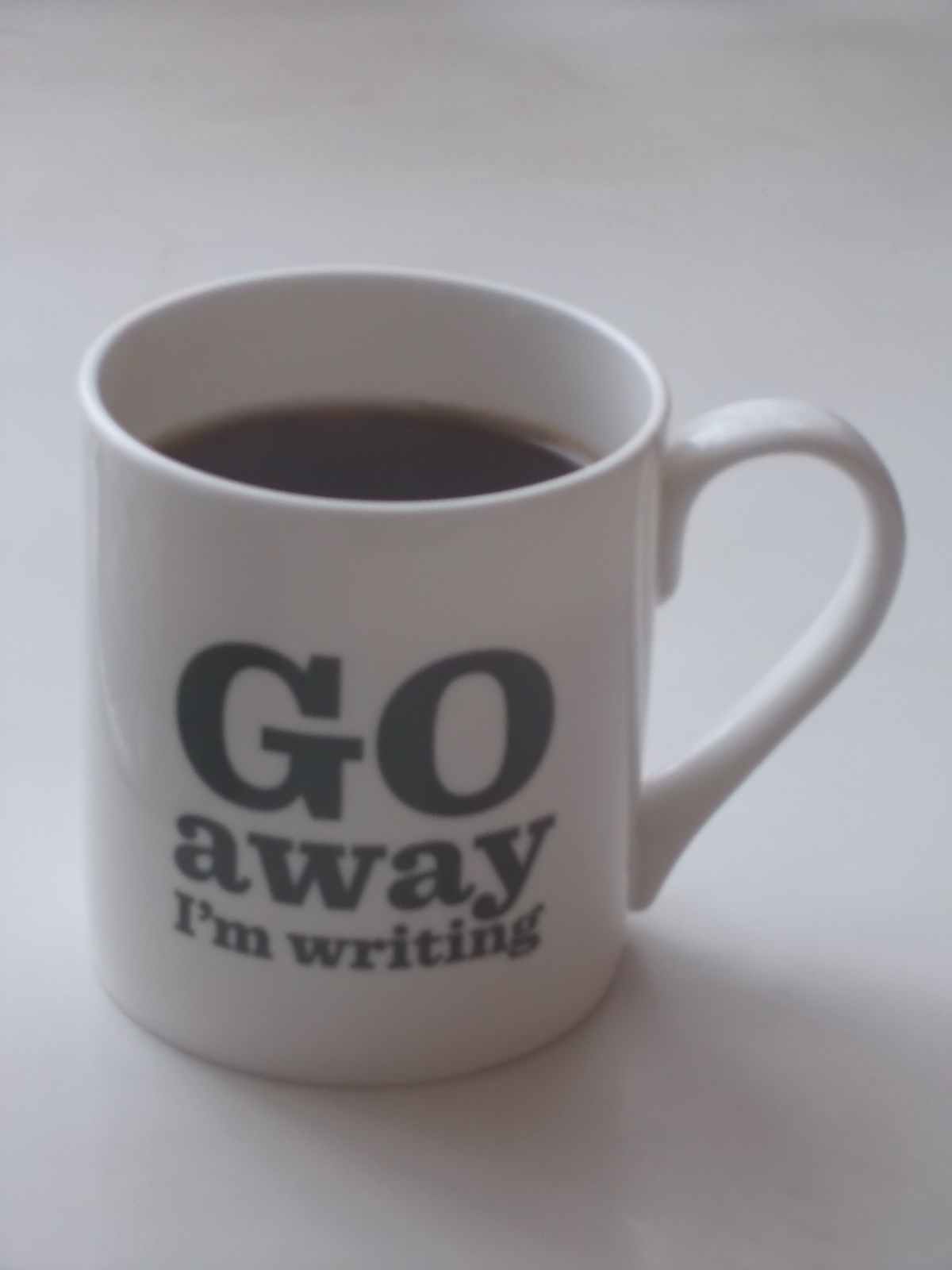
My fuel tank ... and a message.

My fuel tank … and a message.

Amazon Bitch – Part 2 of 2

£ $ £ $ £ $ £ $ £ $ £ $ £ $ £ $ £ $ £ $

We can lie and fall into the self-denial category, or we can come right out and admit that we may enjoy our writing, but we would like to make some … no, a lot of money from it. I’d love to see one of my stories being adapted as the basis of a movie, but maybe that’s a topic for another post.

My suggestions on how to be successful with sales are based on my own experience, not on a list provided on the Internet. There are several on there, I know.Smoke & Mirrors 020614

1. Present your books to the best standard you can. Consider the actual writing, punctuation, grammar, editing and formatting. Do not under any circumstances publish something that has only been written in one draft. My average for a novel is four drafts. My short stories usually take about six or seven drafts.

2. Pay to have eBook covers designed. Sales of my novels increased dramatically after I’d had the covers designed by a professional. Expensive perhaps, but following the revamped covers, the sales of one of my novels paid for the covers of all three novels in less than three months.

3. More than one title assists sales, but that doesn’t mean you should rush out your next book. Take your time, get it right and watch your books sell because readers trust your name and brand. Do not allow your name to be discredited by a poor book – and poor reviews.

4. Increase your social platform. There was a time when I scoffed at social media, but now I use it daily. Why? I post a link to my author website on three different Facebook groups daily. I occasionally post on Twitter, but not as often.

5. If an author website is beyond your reach financially, get a blog organised in the meantime. My first blog lasted over a year before I realised how many mistakes I was making with the content.

6. Only when you have two or more books to promote – consider an author website. If a website is out of reach – use a blog template to build an author website, but treat it as an author website – not a blog. If necessary, set up two blogs. One used as a blog, and the other as an author website. If you have any issues about the difference, please feel free to check my own.

7. Organise an Amazon Author Central page. This can be done on both the UK site and the US site. I have a page on both.

8. Review the work of your peers, and don’t stick to your own genre. I’ve reviewed Young Adult, Supernatural, Romance, Thriller, Suspense, Erotica, The Classics, Humour, Science Fiction and Children’s books. You will gain by:
a) possibly learning something, and, b) the recipient author and others might even check out your work. We all need each other, and we need to do our best in writing and support.

9. Price your books appropriately. Use common sense and remember you might become the next Stephen King, or Jackie Collins, but until you are at that level – be honest and realistic, not over-confident and greedy.

10. If you intend to produce a collection of short stories, publish a couple on one or two reading and writing sites and get feedback / reviews / critiques from total strangers. That really is a wake-up call. Make the number of stories in an anthology worthwhile.

Coming Around - 020714

***

However you read into my blog posts or my occasional Facebook rant, I am not a know-it-all, and I accept that I sometimes make a mistake, but I put myself and my writing through the wringer. I give many hours over to learning about and improving my craft.

We owe it to each other and to the industry not to put something out there half-cocked. If your mum, dad, brother, sister, boyfriend, girlfriend, or Auntie Agnes likes your writing then I’m happy for you – but please don’t take their word for it that you’ve got it right and you’re good.

Why do I rant about getting the writing as good as we can?
1. Would you ride a bike, or drive a car with loose wheel nuts?
2. Would you buy a keyboard with two letters missing?

We are asking people to give us money for these things that we write. It’s a transaction whereby we suggest that what we’ve produced is worth money, and the buying public pay their hard-earned money in good faith.

I keep my book prices low. I don’t do it because I’m rich, because I’m not. I also don’t do it because I haven’t made any effort, because I work damn hard. I keep my prices low because I’m not a household name and I’m realistic. I want to build my personal brand and I will only be able to do that with a good catalogue of books that have received good reviews and are making sales.

I can sense that I’m going off on a tangent, but I hope I’ve managed to get at least a couple of points out there.

Lest I forget, I don’t expect to see my sales increasing after leaving Kobo and Smashwords, but within 24 hours of enrolling on the Kindle Owner’s Lending Library my books were being borrowed again. If it gets to a healthy level I’ll write a post.

All comments are welcome as always and thank you for reading.

***