Amazon Bitch – Part 1 of 2

Yes, I’m coming out as an Amazon Bitch.

Ten Days in Panama - the cover 2904

Apart from reading conventional books, as a Kindle user it was logical for me to self-publish on Amazon when I eventually took the plunge.

I published Ten Days in Panama in November 2012, happy to leave it and get on with other projects. Sales were occasional and single figures inside any given month.

I published Beyond The Law in October 2013 and it made sales quite fast, comparatively speaking. It also reached double figures in one month before I made any effort to ‘promote’ it on social media. Beyond The Law - the cover 2904

In both cases I enrolled in the KDP Select (KDPS), and Kindle Owners’ Lending Library (KOLL). I figured that a little bit of extra publicity would be good, even if it meant that some folk might borrow my hard work, instead of buying it.

My sales increased a little – for three reasons.
1.  I had more than one book on the system. The more titles you have out there, the better.
2.  I was making an occasional sale to far off lands like Japan and India, and I saw my books being sold, and occasionally borrowed.
3.  I increased my social platform, which in my case meant going on Twitter and Facebook more often than twice per month – and I joined a couple of Facebook groups.

I tend to work on more than one project on an ongoing basis, so May and June of 2014 saw publication of my two short story anthologies, which were rapidly followed by my third novel, Amsterdam Calling in July 2014. I didn’t enrol any of these on the KDPS or KOLL schemes.
Amsterdam Calling - the cover 260714

In July 2014, I allowed my 90 days to expire on my first two novels, so I was free to publish elsewhere. I published all of my work on Kobo and also on Smashwords. During 2013 – 2014 I published my five-book series of poetry anthologies and they increased my profile.

Bang up to date and by mid-October 2014, I had not sold a single copy of anything on Kobo. The books sold on Smashwords only just made it to double figures. Neither of those sites has worked for me. Over the same period I’ve watched sales of my novels increase steadily on Amazon, but the reasons I will relate in the second part of this tale.

With effect from 21st October 2014, I have unpublished from both Kobo and Smashwords. As soon as I had confirmation, I went to my Amazon bookshelf and enrolled my full collection on both KDPS and KOLL.
In the next post I’ll talk about how to increase sales, in my humble opinion.
Thank you for reading and any comments.

See you at the weekend for Part 2.

Resources – Shopping Catalogue

This, like my other ‘resources’ posts is aimed mainly at the writing community, but might still be of interest to fellow readers.

How does a shopping catalogue assist in writing?

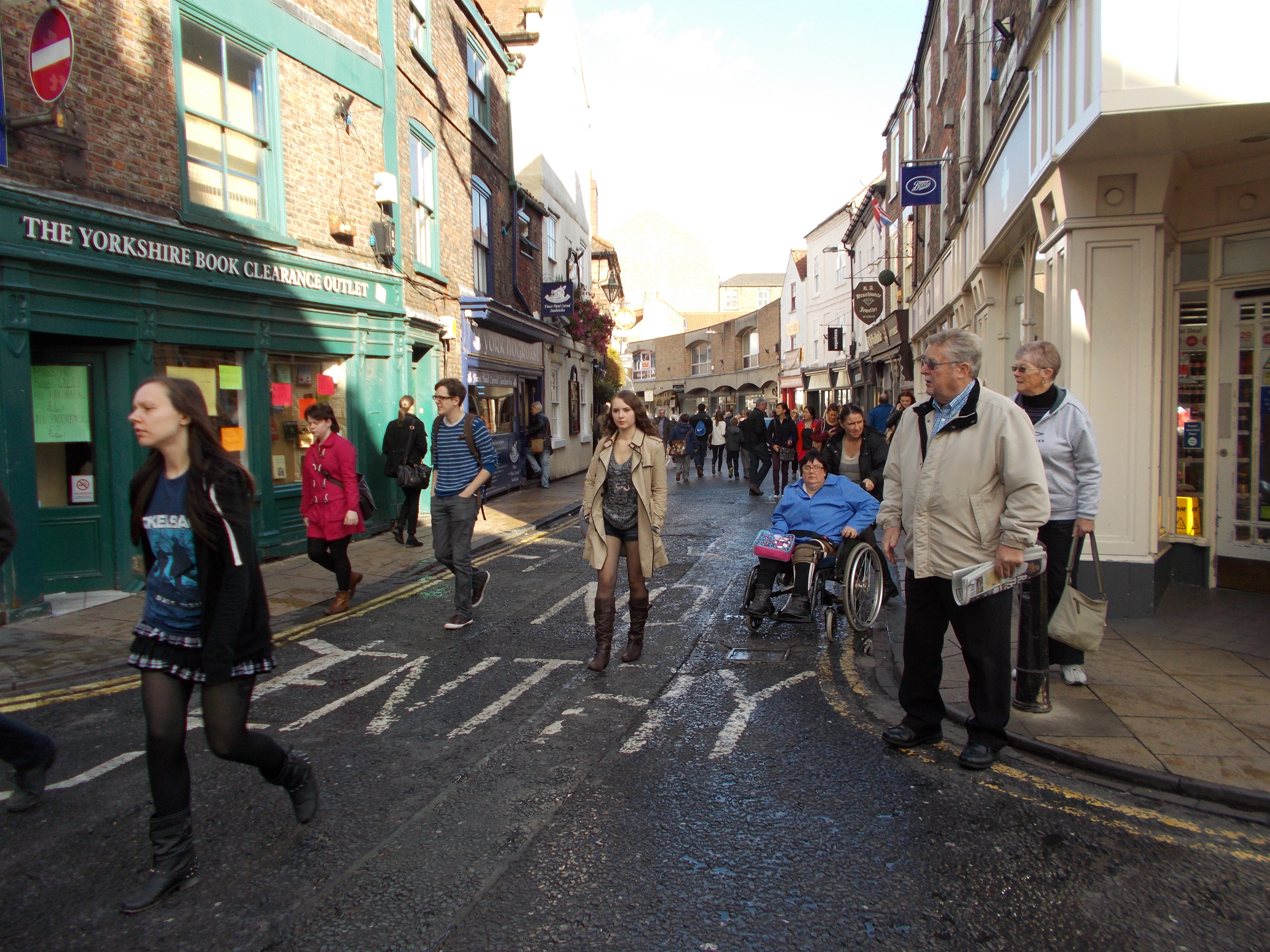
Which would be your story's character?
Which would be your story’s character?

Let’s look at a scenario, but not one from a book – a scenario that portrays the writer, and in particular the novice writer.

The screen is filled with the description of a scene that the writer decided would be a good start to the new chapter. Great. Now, unless the people concerned are in a nudist colony or are on the telephone, logic suggests that the reader might want to know what they look like – and how they are dressed.

I know from experience that the words can flow and everything looks good on the screen, or in some cases on my Moleskine notepad. A quick revision suggests that I have issues imagining the scene now, because I don’t actually know what these characters look like. I did when I wrote the passage, but now, no mention of age, hair colour, eye colour, complexion, outfit.

There was a time when I would stare at the screen and perhaps make some idle notes about those details I’ve just mentioned. That then took away the pace of my thought process and dented my confidence in what I had written.

Prior to writing a new character now I write them a brief bio which gives them an individual appearance and a background. Their taste in clothing can be quite diverse, but they must have an outfit to start with – enter; the shopping catalogue.

Let’s say somebody has a ‘walk-on’ part in a story and you have their position all lined up, but you need to give a description – enter; the shopping catalogue.

Perhaps it’s the actual characters that are causing the delay in producing words on the page – yes, enter; the shopping catalogue.

Do you now see where I’m coming from here? I thought so.

In summary, a shopping catalogue presents the writer with ready-made, anonymous characters of many skin colours, ages, hair colours, physiques, many age groups, and of course both sexes.

It also provides us with clothing, footwear, accessories, jewellery, household goods, toys … and so on.

Did you look at the heading to this post and think, he’s joking?

Well, whatever you thought, perhaps now you’ll realise I wasn’t joking – and more to the point, you might have become a convert to the idea.

Today I really must visit some blogs. I’ve been spending so much time building characters from my catalogue. Seriously, I have been writing on a daily basis recently and I sometimes focus only on the plot I’m working on and lose the plot to everything else around me.

Until next time, thank you for dropping by.