
—PAGE UNDER CONSTRUCTION—
This is the process by which you reread work and make amendments.
At this stage it will depend on the method you’ve used to write your story. If you’ve written it by hand, the best way forward is to get a red pen and as you read and want to change something, put a line through the word, sentence, paragraph or whatever.
On a fresh sheet of paper, use the same chapter heading, and write amendments.
Rewrite the paragraph as you think you’d like it to sound.
This exercise will take a long time, but it’s a drill you have to become good at, so take your time. You might continue for a while and only get through two or three chapters before stopping. That’s fine, and treat this the way you did the writing of the whole first draft—stop and take breaks.
**(Computer users, make a copy of your original manuscript, but don’t amend the original, amend the copy, and change the date in the file name. Each time you write a new draft, use a copy of the previous one, and change the date. Keep all of your drafts and you’ll see your progress).
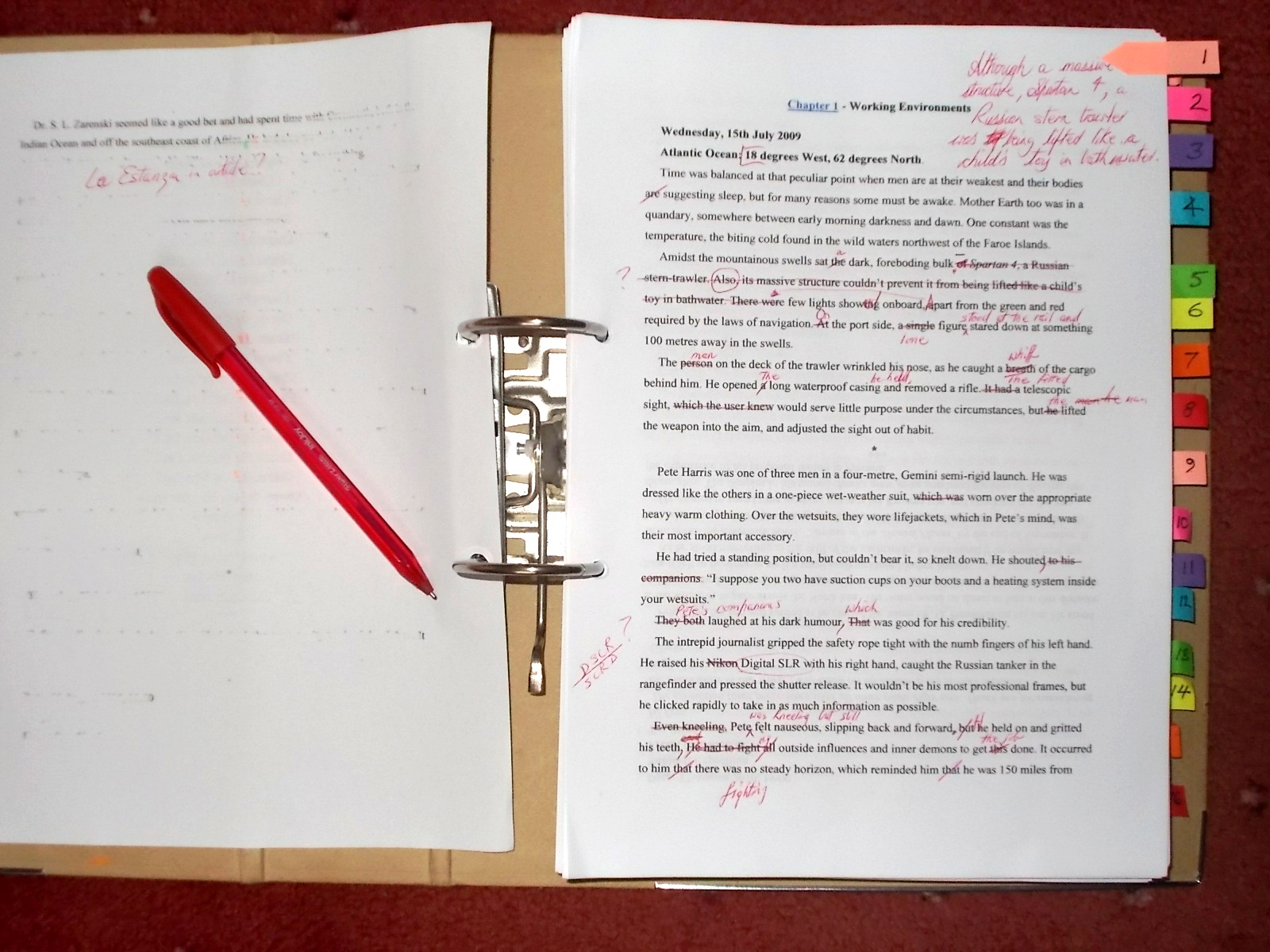
Let’s say you’ve taken a week to go through the entire manuscript and you’ve ended up with about twenty sheets of revised sentences and paragraphs. Each of those sentences or paragraphs will have a number beside it which corresponds to where you want to insert it into the main story.
Yes, your next tedious task, is to write the whole thing again. Copy it from the first draft, and whenever you come across a part with red ink, and a little number you’ll know you have a new version to use. Go to your sheets and find the appropriate amendment, and write it into position. Go back to your copying of the manuscript, and slowly, steadily, deal with all your amendments.
Okay, so you’ve written the whole story which took weeks.
You then returned to it with your fresh paper and after annotating the manuscript with a red pen all the way through, you ended up with pages of amendments.
With a fresh respect for those who have done this before, you rewrote the whole story, but inserted your amendments. By the end of this stage you’ll be asking yourself if it’s worth all the hassle.
Yes, it is, so maintain a positive attitude. You wanted to do this shit, so keep going.
When you’ve got your entire manuscript totally rewritten, put it away, in a cupboard, a drawer, or wherever, and don’t touch it for two weeks. No bloody peeking either.
During your two weeks of abstinence from working on your story, there are things to do.
1. Read every day, and I’d advise a novel, so that you become accustomed to seeing the layout and how narrative (non-speech) and dialogue (speech) are used.
2. Read a section or two from your text books on grammar, punctuation and writing skills.
3. Write something every day, and it doesn’t have to be much. It could be a passage about how you drove to the shops, or how you made tea and toast and had a chat with someone while you did.
Basically, maintain your skills, and regular reading should be one of them.
These pages have been a jump start to help get you underway, and if I get positive feedback I’ll continue with advice for the remainder of the process.
***

 tombensoncreative.com