
 is for – Dingo, Dolphin, and Dipper. We’ll look at Dolphin.
Dolphins are highly intelligent animals and have acute hearing, in or out of water. They are known to be sociable creatures, but like so many others, the males will become aggressive when in competition for a female. (Yes, don’t we know all about that aspect of life).
Having fought to get the female, the male (bull) relinquishes all duties regarding the young calf, which it leaves in the care of the mother (cow).
Dolphins have been responsible on many occasions for saving humans from shark attacks and, the dolphin’s ‘beak’ is a considerable weapon when used as a battering ram.
A group of dolphins is called a ‘school’ or ‘pod’.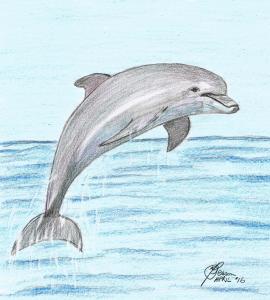
*****
Species: There are 40 recognised species of dolphin. Porpoises are mistakenly thought by some people to belong to the dolphin family, but, they are a separate group entirely.
Size: Due to the inclusion of Killer Whales in the Dolphin family, the size differential is extensive. The creatures of the many species referred to as ‘Dolphins’ are on average 5 feet long from nose to tail. Killer Whales (Orca) will grow to around 30 feet long.
Habitat: There are oceanic dolphins and river-based dolphins.
Location: Dolphin species of some description can be found in almost any open sea or oceanic area of the world.
Diet: Fish and Squid are the staple diet, although the Orca (Killer Whale) will take seals, or small whales.
Predators: Dolphins are actively hunted in certain places (Japan and, The Faroe Islands). Numbers are depleted regularly by mankind through pollution, accidents with boats and, bycatch (being caught in nets and drowning).
Info / Strange Facts: The inhabitants of Tahiji in Japan and those of the Faroe Islands consider the dolphin as food. There is a level of karma, in that dolphin meat is high in mercury, which is of course poisonous to humans.
In Laguna, Santa Catarina, Brazil, dolphins assist the local fishermen by driving the fish towards the shore. The dolphins take the fish which escape the nets.
The idea of a Military Marine Mammal Program (MMMP) has existed for over 50 years. The USA and Russia have conducted a variety of training and active service using Bottlenose Dolphins. Russia is said to have ceased the enterprise, however the US is open about the continued use of the animals.
The official training is said to be to locate persons in the water and to locate mines, however certain other practices are thought to be in existence, although not admitted.
*****

 is for – Cheetah, Coral Snake, and Condor.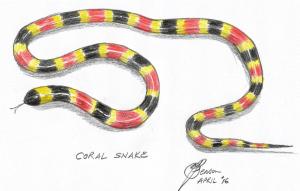

 tombensoncreative.com