Admit when you’re wrong

For a few months, I’ve been working simultaneously on different projects. This has always been an effective way for me to keep the ideas and words flowing, therefore avoiding the dreaded writer’s block. My method has a drawback that I’ve only experienced twice before, but it happened recently.

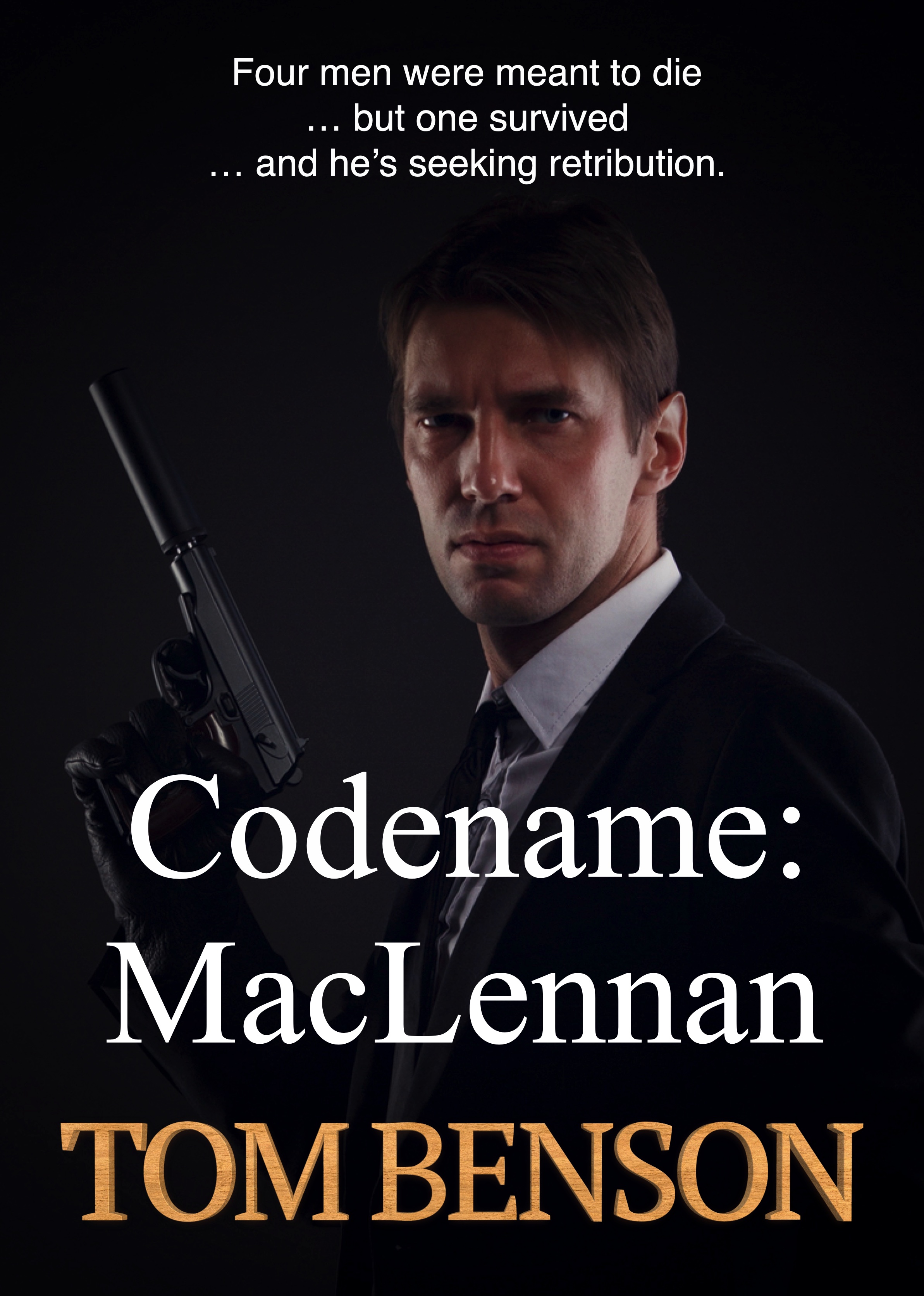
Whilst on a caravanning holiday in the Scottish Highlands, I reread MacLennan from the beginning, and found that although I’d produced lots of words, the story I’d created wouldn’t have captured and held the attention of a reader. I removed and saved approximately 20,000 words to a folder designated for that purpose, and then I began reworking the remainder.

Over a period of ten days, during early morning sessions and occasional hours spent sitting in the awning, I applied myself to injecting more intrigue, suspense, and action, and the words flowed once again. Like many of you other scribes out there, I know when the story feels ‘right’, and I’m pleased to say that in its new format, MacLennan is in that category.

Yes, we must all have self-belief, but we must all be brutally honest with ourselves. We must utilise beta readers, editors, and anyone else recommended for guidance and the polishing of a tale. It remains, however, our responsibility as authors to produce our best efforts at each stage.

It’s vitally important to admit when you’re wrong.

I now have 50,000 words, and I’m comfortable with the new characters, those being reintroduced, and the pace, which is crucial in such a story. The action works, and so do the occasional breathing spaces, so I feel I have another viable thriller in the making. It may or may not be ready for publication by the end of the year, but I’m in no rush.

I’ll give plenty of notice in the IASD group on Facebook with an approximate date for when I’d appreciate beta readers.

If you’d like a flavour of the story, here is a link to Chapter 1, The Invisible Man.

As always, comments are welcome. Thank you for visiting.

You cannot be series …

Poetry covers compilation
Yes, the fourth word in my title is the proper spelling. It is not meant to be the statment made famous by tennis star John McEnroe, although I admit, I was tempted.
If you’re too young to remember, on more than one occasion the talented and quick-tempered Mr. McEnroe would challenge an umpire’s decision with a wild stare, whilst screaming,                   “You cannot be serious!”
As this post develops I’m sure that most of you guys will see that I could have gotten away with the tennis player’s outburst as my alternative title.

*

I’ve noticed that there is a tendency these days for writers, and especially novices, to produce sequels, or even a series of books. Authors have various reasons for doing such a thing, and those reasons cover a wide spectrum. I’ll list a few reasons to help get my point across.
1. The writer wants to explore how far they can push a character whether it be in development or experiences and adventures.
2. The lazy or greedy writer, who simply wants to exploit the market, by producing several titles of very short works; calling them a ‘series’.

Why do I say greedy?
I’ve recently discovered an author who is publishing nothing more than long chapters and giving them the title of ‘book’. In this way he creates a ‘series’. Yeah, whatever.

How do I know that it’s greed?
If somebody has the audacity to consider such an underhand tactic, the least they could do is ensure that the ‘books’ are properly edited and formatted. In the case I’m highlighting, they are not.

*

Some books lend themselves to the idea of a sequel, or series, simply by the nature of the original story, whilst others do not.
There is a train of thought that such a thing is easy to do, but in my opinion, in any subsequent books the necessary information must be drip-fed to the reader as the story progresses. It should not consist of massive chunks of force-fed back-story; which I’ve seen in some attempts at a sequel.

My opinion on what works and what doesn’t for sequels and series.

What works?
A series, whether it is 2 books, or 22 books, should have a constant aspect, whether it is in theme or character.
For example:
1. Each book has a different character, but the theme is the same.
2. A fresh case or plot with the same central character since the first book.
For example:
Private Eye, police, medical, adventure, espionage, western, military, thriller, seafaring, Sci-Fi, fantasy, paranormal … and on the list might go.

What might not appeal to readers after a couple of stories?
The certain knowledge that the protagonist is virtually indestructible – and it’s not Superman.

What doesn’t work?
In the right hands just about any genre is good for a series, but the decision to tackle this particular idea is not something that should be taken lightly.
Romance for instance could lend itself to a series if the basis of the stories was to take a fresh story from the point of view of various characters from one central theme.
For examples:
1. Stories detailing the love-life of the members of an office or other business.
2. Stories detailing the love-life of the members of a community. Now this could be a nice little earner if you were prepared to devote half your life to it. Instead of the community being a small village, how about telling of the romances onboard the cruise ship Laid Back Lady, which has 500 crew and 4,000 passengers?

Now there would be a money-spinner.

*

To reiterate my point, we must all be aware of giving our customers value for money, so we must be conscious of providing a good product and not creating a ‘series’ out of nothing. In particular we should keep an eye open for those in our business who are prepared to undercut the readership, which includes us.

Integrity is a key factor when considering if a writer is writing a sequel, or series for the right reasons.
As always, I thank you for coming by and reading my thoughts. Please leave a comment if you feel so inclined.

***