My New Writing Year – 2025

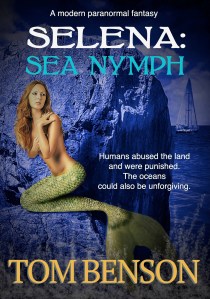
This year I will concentrate on two stories; McLENNAN and SELENA: SEA NYMPH, which, unsurprisingly, are poles apart in content.

McLENNAN features a male vigilante, and was inspired by my short story, Resettlement. Fellow crime thriller writer, Barbara Speake suggested that the idea in the short story could be expanded. That tale can be read by clicking on the title or it can be found in my anthology, Shadow: and Other Stories. Research into locations and certain areas of society will keep me occupied when I’m not actively writing the story.

SELENA: SEA NYMPH will be my other main task. It has been a work in progress over the past couple of years, but I’m confident that I’ll finish the job this year.

As a non-swimmer and, therefore, someone who’s never been keen on waterspouts or travel by boat, I will be literally out of my depth in some parts of the story. In my favour, many years ago I tried my hand at canoeing, and I attended a two-week swimming course, so I’m not without experience when it comes to spending time underwater. My imagination, coupled with a lifelong interest in natural history and a nod to conservation, will play their parts in the storytelling.

In the background, I’ll work on A Life of Choice: The Retail Years when the other two stories are resting between drafts. This story stems from the idea that we relate anecdotes and say things like, ‘I could write a book about it.’ It was as recently as November 2024 when I decided I’d aim to do just that. I chose the title to fit with A Life of Choice, my five-eBook series loosely based on my military career. As with my military memoirs, I’ll be in no rush with this story, but I foresee it being a single volume and written in a different format. When I eventually have something to offer for feedback, I’ll post it here.

I will, of course, be reading a lot, beta reading for fellow authors, and I’ll continue to produce short stories for submission to the amazing quarterly Connections e-Magazine produced by fellow indie author, Melanie P. Smith.

I sincerely thank my regular readers for choosing and supporting my brand. If you’re new to my writing, I hope you’ll soon become one of my valued readers.

If you want something done …

You’ll be aware of the paradoxical phrase, ‘If you want something done, ask a busy person’. There are variations but they all aim to suggest one thing, which is that a person with a heavy schedule is more likely to add and complete an additional task. That type of person is also more likely to either accept the extra work or say that they’re unable to help.

What is the main thrust of the phrase and the theory behind acceptance or refusal?

The busy person will not let you down by accepting and failing to complete. If they don’t believe that they can include the task into their schedule they’ll say so, rather than let you down by not succeeding.

Where does this fit in with being an author?

It depends to a fair extent on the type of person you are, and not the type of author. Writing, after all is one aspect of a lifestyle, even if that person is an author. Now, let’s look at this a bit more closely, and as authors do, I’ll use what I know best … my own case.

When I started out into the world of writing I got underway with a poem or short story, and I would labour over one piece at a time. I could stare at a notepad, or a screen, and yes, I would get the job done, but it was soul-destroying at times. When I moved on to writing novels I found a similar ‘block’ effect, whereby I would write three or perhaps four chapters and then … nothing.

My life as an author became more productive and therefore more enjoyable when I came up with the idea of ‘resting’ a piece of work if I got stuck.

How does that equate to productivity and enjoyment?

I saved and left the troublesome piece on file, and got underway with another story. Over the years I’ve become proficient at maintaining multiple Work in Progress. Apart from creating the choice of which story to work on, I believe that this method alleviates an issue that many authors learn to deal with in different ways.

Let’s say, for example, that you’re writing a story and at a certain stage you go off on a tangent or your mind wanders while you’re taking a break. For some writers, the natural response is to shrug off the thought, believing that it will come back to you later. Other writers might find themselves with something akin to an ear-worm which is ever present while they try to work. I don’t rely on remembering the passing idea. Attempting to work on a story with another firm idea on my mind would be distracting.

I open a new file and write the opening line, title, theme or whatever had presented itself. A good technique I’ve discovered for preserving a fresh idea and moving on, is to create a working title, and write a strap-line or brief blurb.

Giving an additional task to a ‘busy’ person is not an exact science, it is a notion based on human nature and personality types. I believe that most authors may consider themselves as that busy person, and therefore ought to try the method I’ve found successful. When you’re stuck for whatever reason, don’t procrastinate until the active piece of work becomes an irritation, try to relax and let your mind wander. You might come up with your next project.

As always, comments and suggestions are welcome, and thank you for taking the time to read my thoughts and theories.

***