Beta or Worse?

Okay, so you’ve written a book and you’ve got a cover.

When you’re happy, do you go ahead and publish, or do you take it steady and make sure it’s readable?

Personally, I ask for beta readers and the more the merrier, whether it be a novel or a         collection of short stories. Yes, there might be a few issues in the final product but they also appear in books by acclaimed traditionally-published authors. Errors can be cut down dramatically with some effort and patience. It’s the responsibility of the author to produce the best book they can.

Before I send a manuscript to readers I’ll have gone at least as far as the third draft and on at least two occasions printed the story to perform a ‘red-pen’ edit. Even then, I tend to offer my beta readers a handful of things I’m    concerned about—a reader’s guide if you like:

Does the intro work? Is the dialogue realistic? Are the characters believable? Did you enjoy the story?

The list can be as long as the author feels necessary, but it’s hoped that the beta reader will highlight other issues too. If you create your characters and your imaginary world with care and attention to detail it will help to make the end product believable.

I’ve performed beta reading for many indie authors. Each book is different in length, style, author’s voice and topic. Not every book might be one I’d go looking for as reading material, but if it will help a fellow author I’m glad to do what I can if I can afford the time.

No, I’m not an editor but my expertise is that of the   reader who knows when something isn’t right in a variety of areas.

I know for example that firing an automatic pistol at a padlock or a door lock is about as much good as throwing your pen at it. Similarly, the only time firing a handgun at an escaping car will work is in movie-land. I know when to use farther instead of further, and inquiry rather than enquiry. No, a cowboy wasn’t thrown against the barn door by the ‘blast’ from a Colt 45, and I don’t care how close his adversary might have been. They’d need to be close just to hit one another. Cars don’t explode simply because they’ve overturned, and some blades don’t slide straight back out of the body after being thrust inward and upward.

Consistency and continuity are important to me and they are not the same thing.

Regarding consistency, I’m looking for a character’s name to always have one spelling, unless a nickname is used, and if a character has blue eyes, then they shouldn’t have brown eyes in the next chapter.

In continuity, I expect that when a character gets into a blue Jaguar and drives somewhere, they don’t get out of a red BMW at their destination.

To avoid rereading I prefer that no two characters use the same weapon, drive the same car or have similar names.

Two characters should not have their voices heard in the same paragraph but it seems to happen in a lot of eBooks. Sentences should also be manageable so that by the time you reach the end you remember the subject.

Dialogue tags don’t always have to be descriptive because the imagery and the dialogue ought to be creating the picture.

It’s fine, even preferable for a character to have a favourite word or phrase but not an author. Think about that one.

One of my greatest gripes is an author who doesn’t know their subject. Take for example the case of the famous   author who’s BDSM character introduces a young woman to mild punishment by giving her a traumatic thrashing with a leather belt, or … no, I’ll leave erotica out of this. Some misguided ideas would make your eyes water.

You get the idea … research, research, research, and don’t just use Google.

If you have space and are physically capable, get out of your chair and try the move you’ve just choreographed. How about:

Getting out of the car, she touched-up her lip gloss and lifted her purse.

No, she didn’t do it all while ‘getting out of the car’ she performed three separate actions.

Recently, I’ve spent a lot of time beta-reading for fellow indies and one of the things I feel that it does is help me in my writing. When I see an issue it tends to stand out and I learn from it, so it’s much less likely that I’ll do it in my work. Invariably, I gain confidence in my writing by seeing that in many cases I know when something is wrong or could be improved.

As an author, I’m aware of how important it is that I read regularly and widely. Thankfully because I’m a member of Kindle Unlimited I’ve been able to start and discard three books in the past couple of weeks. Unfortunate,   perhaps, but if those authors had taken the time to ask for a beta reader or two and I’d finished their books, I might have become a fan.

This article isn’t a rant, I’m highlighting an area of our craft that all indie authors should consider.

All comments are appreciated as always.

***

P.S. Yes, I have changed my blog theme again. 🙂

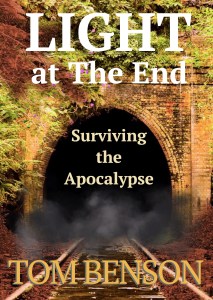
Light at The End


This is my first attempt at depicting a post-apocalyptic scenario. Almost every day in the media we learn of conflict in various regions around the globe … or ‘across the board’ for the Flat Earth Society. 😀

As ‘nations’ argue with each other publicly and their leaders make veiled threats via international media and occasionally on social media, many people cast it all aside as hot air. All around we hear cries of ‘We’ve heard it all before’, but what if on one fateful day it all goes wrong and some of the threats fall on the wrong ears?

The blurb follows below with the cover image. If you’d like to see how things get underway there is an Amazon link below. The first chapter is available under the book title in my Novels section of the main menu.

***

Bill Kane’s long military career had recently ended so he relaxed by joining a three-day sightseeing tour in the Scottish Highlands. At last, the ex-Serviceman would be able to leave stress and decision-making to somebody else, or would he?

While the squabbling of world leaders intensified on international media, Bill, like others, shrugged it off as sabre-rattling, but the sabres in question were nuclear missiles. An unthinkable situation developed rapidly. A missile was launched, and retaliation became a chain reaction.

On a mountain road in Scotland, Paul Harrington a young coach driver listened to the news in disbelief. When his passengers returned down the hill from the latest viewpoint it would be Paul’s responsibility to get them to safety, but to where?

No town was within easy reach, but he remembered a disused railway tunnel not far away. Could he get them there in time, and how would they survive?

***

Amazon-Preview/Buy

BookLinker-Universal